




Industrial Manufacturing
Strengthening competitiveness in complex Industrial environments
The Industrial Manufacturing sector in transformation
Manufacturing companies worldwide are facing a profound transformation.
Increasing global competition, supply chain disruptions, rising energy costs and accelerating technological change are reshaping industrial ecosystems. At the same time, manufacturers must address structural challenges such as workforce shortages, aging industrial assets, and the transition toward more sustainable production systems.
In this environment, industrial competitiveness depends on the ability to manage complex production systems in a structured and resilient way, and to combine operational excellence, reliability engineering, technological innovation, digitalization and strategic governance.
Brains & Solutions Consulting (BSC) supports industrial manufacturers in strengthening their operational performance, improving asset reliability, and accelerating their transition toward smarter and more resilient industrial systems.
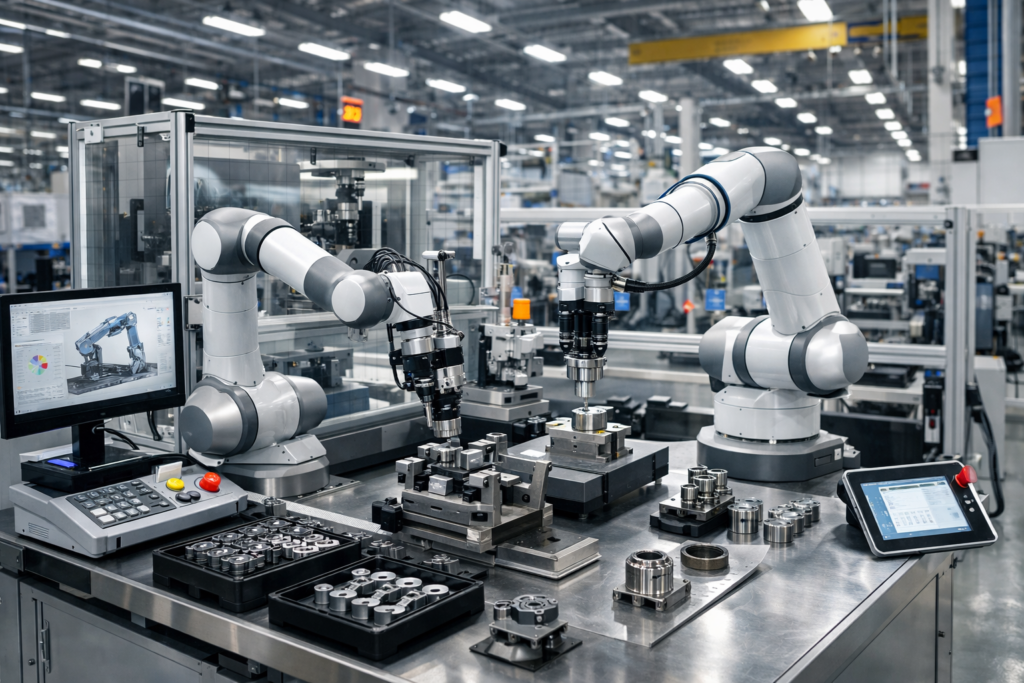
We supports industrial manufacturers in transforming their operations into high-performance, resilient and sustainable production systems,
Key challenges facing industrial manufacturers
Industrial manufacturers across sectors such as automotive, heavy industry, advanced manufacturing, chemicals and industrial equipment are facing a set of structural challenges.
Productivity, Cost pressure and Competitiveness
Manufacturing companies must constantly improve productivity to remain competitive in global markets.
Key challenges include:
-
Increasing energy and raw material costs
-
Operational inefficiencies and hidden production losses
-
Equipment downtime and reliability issues
-
Growing pressure on margins
Improving Overall Equipment Effectiveness (OEE) and eliminating operational losses have become strategic priorities.
Supply chain resilience
Recent global disruptions have exposed the vulnerability of supply chains, requiring stronger operational robustness and better risk anticipation. Manufacturers must develop stronger supply chain resilience, optimize inventory strategies and improve operational agility.
This means strengthening the capacity to manage:
-
Supply disruptions
-
Inventory risks
-
Logistics complexity
-
Multi-site production networks
Resilient production systems require better integration between production, maintenance, logistics and planning functions.
Skills shortage and workforce transformation
A growing shortage of technical skills is affecting many manufacturing sectors.
Organizations must therefore:
-
Accelerate knowledge transfer and training
-
Strengthen operational leadership on the shop floor
-
Develop multidisciplinary engineering capabilities
-
Support workforce adaptation to digital technologies
The future factory depends not only on technology, but also on competent, engaged and empowered teams.
Reliability and availability of industrial assets
Unplanned downtime remains one of the most significant drivers of lost productivity and operational cost.
Manufacturers must shift from reactive maintenance toward reliability-driven asset management, including:
-
Structured maintenance strategies
-
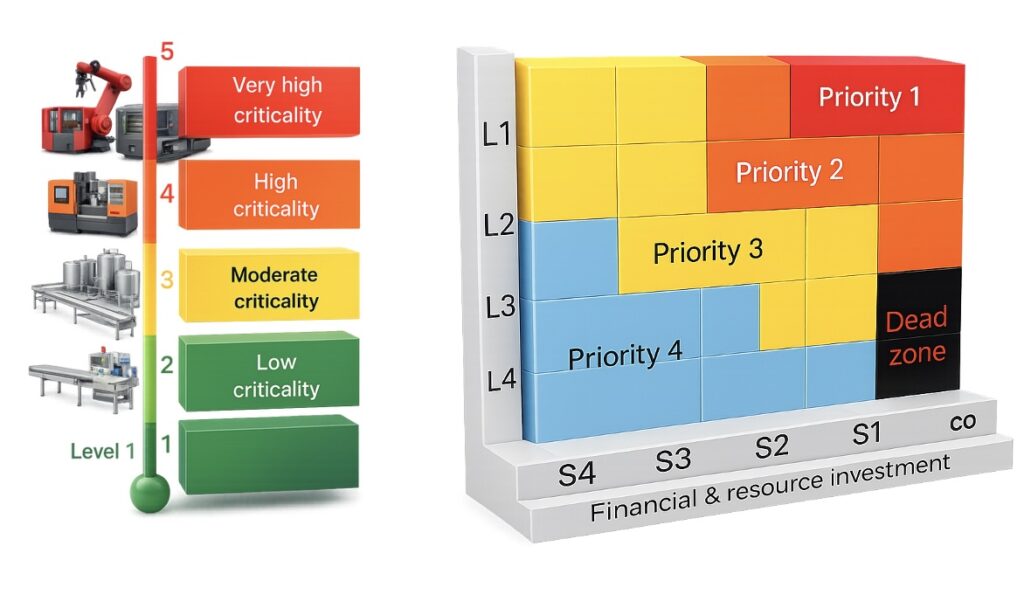
Critical equipment prioritization
-
Predictive and condition-based maintenance
-
Data-driven reliability engineering
Reliable assets are essential to ensure stable production, cost control and long-term competitiveness.
Growing complexity of industrial systems
Modern industrial installations combine mechanical systems, automation, software, data infrastructure and digital control layers. Managing this complexity requires structured engineering methodologies and integrated system thinking.
Digitalization and Industry 4.0
Digital technologies are transforming manufacturing at an unprecedented pace.
Smart factories increasingly rely on:
-
Industrial data platforms
-
MES and advanced production monitoring
-
Predictive maintenance algorithms
-
Digital twins and simulation tools
-
AI-assisted process optimization
However, digital transformation must remain aligned with operational realities and business value, not technology alone.
Decarbonization and sustainable production
Manufacturers face increasing pressure to reduce environmental impact while maintaining profitability.
Key priorities include:
-
Energy efficiency optimization
-
Electrification and process modernization
-
Waste and emissions reduction
-
Sustainable industrial design
Decarbonization is no longer only a regulatory requirement. It is becoming a strategic driver of competitiveness and innovation.
BSC helps industrial organizations address these challenges through structured transformation programs that combine engineering, operations and governance.
How BSC Supports Industrial Manufacturers
BSC supports industrial manufacturers through an integrated approach combining engineering, operational transformation and capability development.
Our objective is clear:
help organizations transform their production systems into reliable, competitive and future-ready industrial operations.
Our interventions typically focus on five major transformation pillars.
From strategy to measurable results
Our value lies in our ability to translate strategy into execution and to deliver measurable, sustainable performance improvements in real industrial environments.
Our teams combine deep shop-floor expertise, structured methodologies, and pragmatic execution to ensure that improvement initiatives deliver tangible business impact, not just recommendations.
Typical impact of BSC interventions
*Measured results achieved within 12 to 36 months across completed engagements
Industrial Performance & Operational Excellence
Operational excellence remains the most powerful lever for improving productivity and competitiveness.
We help manufacturers unlock hidden productivity potential within their operations.
Our services include:
-
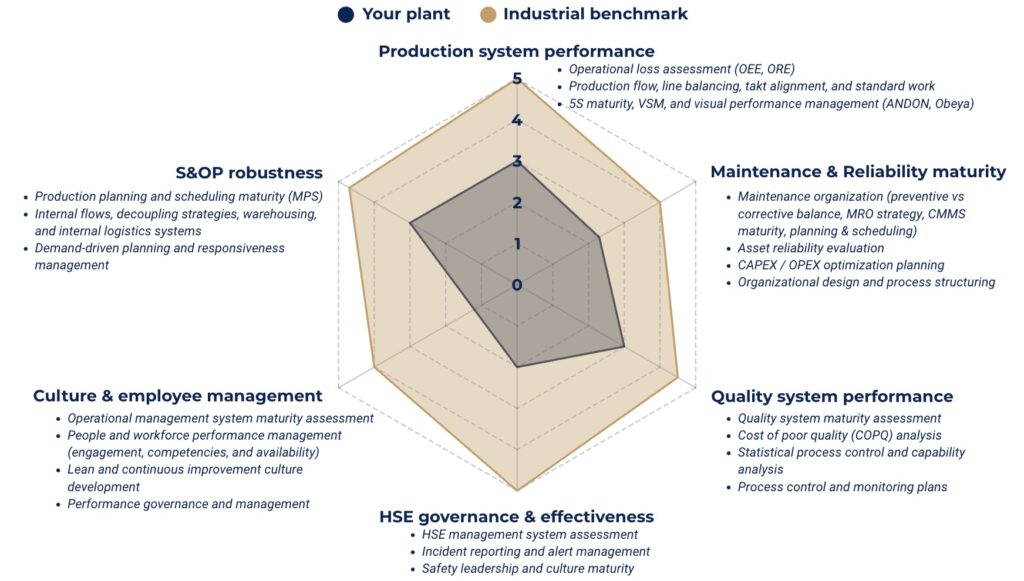
Industrial maturity diagnostics (Production, Maintenance, Quality, Logistics)
-
OEE performance analysis and loss identification
-
Lean manufacturing programs and continuous improvement initiatives
-
Process optimization and waste elimination
-
Shop-floor performance management systems
Our objective: increase productivity, reduce operational losses and strengthen industrial competitiveness.
Reliability Engineering and Asset Performance
Reliable assets are essential for stable and profitable manufacturing operations.
BSC supports manufacturers in developing robust asset management strategies through:
- P2Mi: Structured prioritization of equipment based on operational risks and business impact.
and
- A Proactive Maintenance and Reliability program including
- maintenance strategy aligned with business priorities definition
-
EMP – Equipment Maintenance Plan development
-
FMEA / FMECA failure mode analysis
-
RCM – Reliability-Centered Maintenance strategy definition
-
Failure pattern analysis and risk prioritization
Industrial Engineering and Digital Transformation
Industrial systems are becoming increasingly complex and data-driven.
BSC supports manufacturers in integrating engineering and digital technologies to improve operational visibility and decision-making.
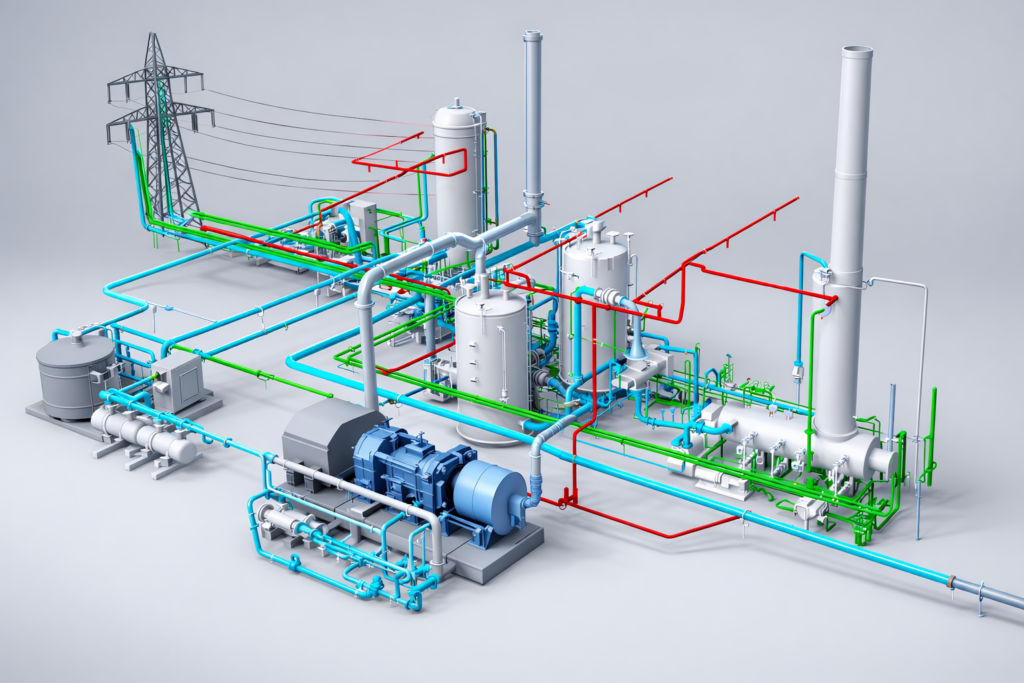
Industrial System Modeling – our engineering teams support:
-
Industrial system architecture design
-
Model-Based Systems Engineering (MBSE)
-
Process modeling and simulation
Digital Twins and Industrial Analytics
We develop digital models and industrial twins that allow manufacturers to:
-
Simulate production systems
-
Predict equipment behavior
-
Optimize operational decisions
These capabilities enable data-driven operational management and predictive performance optimization.
Spare Parts Management Optimization Controlling Inventory While Protecting Production
Spare parts represent a critical balance in food manufacturing:
-
Excess inventory locks working capital
-
Insufficient stock increases downtime risk
Many organizations accumulate large inventories without a clear strategic structure.
BSC helps companies optimize spare parts management through:
-
Asset criticality analysis
-
Spare parts classification and risk mapping
-
Consumption pattern analysis
-
Multi-site spare parts strategy
-
Inventory optimization and stock reduction
The goal is to reduce capital immobilization while securing operational continuity.

Industrial Transformation and Capability Development Developing High-Performance Industrial Teams
Industrial transformation cannot succeed without the engagement and development of internal teams.
BSC supports organizations in strengthening operational capabilities through:
-
Structured industrial governance models
-
Operational transformation programs
-
Technical training and competence development
Our training programs cover key areas such as:
-
Maintenance engineering
-
Industrial performance management
-
Reliability and operational excellence
-
Industrial project management
The objective is to ensure lasting performance improvements and internal autonomy.

Our industrial transformation methodology
We combine a structured and pragmatic approach designed to deliver sustainable results.
1. Field-based industrial diagnostic
We begin with a detailed assessment of operations, including:
-
production performance
-
maintenance processes
-
quality systems
-
logistics and planning
-
organizational effectiveness
This diagnostic allows us to identify the highest-impact improvement opportunities.
2. Data-driven analysis and prioritization
Using operational data and reliability analysis, we prioritize initiatives that generate the strongest return on investment.
This includes:
-
loss mapping and root cause analysis
-
equipment criticality analysis
-
performance benchmarking
-
economic impact evaluation
3. Co-construction of transformation roadmap
We work closely with internal teams to design a realistic and actionable transformation roadmap including:
-
quick wins
-
mid-term operational improvements
-
long-term strategic initiatives
4. Operational deployment and coaching
BSC consultants work directly with operational teams to implement solutions on the ground.
This includes:
-
improvement workshops
-
operational coaching
-
process redesign
-
performance monitoring systems
5. Capability building and knowledge transfer
To ensure long-term sustainability, we integrate training and capability development into all our interventions.
Our training programs cover:
-
maintenance engineering
-
industrial performance and Lean management
-
project management and risk management.